Three
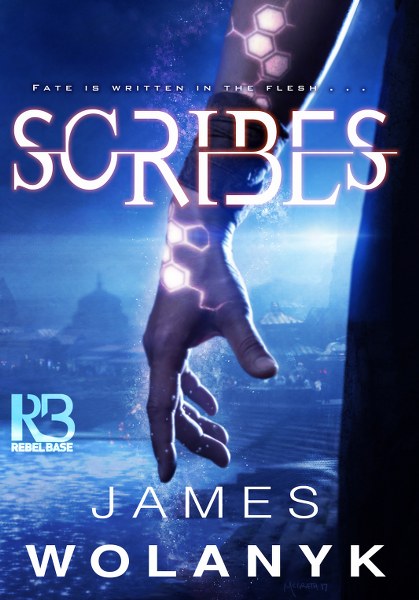
long years have passed since Anna, First of Tomas, survived the purge
in Malijad after being forced to use her scribe sigils to create an
army of immortals. Safely ensconced in the shelter of the Nest, a
sanctuary woven by one of her young allies, Anna spends her days
tutoring the gifted yet traumatized scribe, Ramyi—and coming to
terms with her growing attachment to an expatriate soldier in her
company.
Away
from her refuge, war drums continue to beat. Thwarted in her efforts
to locate the elusive tracker and bring him to justice, Anna turns to
the state of Nahora and its network of spies for help. But Nahoran
assistance comes with a price: Anna must agree to weaponize her magic
for the all-out military confrontation to come.
Dispatched
to the front lines with Ramyi in tow, Anna will find her new
alliances put to the test, her old tormentors lying in wait, and the
fate of a city placed in her hands. To protect the innocent, she must
be willing to make the ultimate sacrifice. For even in this season of
retribution, the gift of healing may be the most powerful weapon of
all.
Pawns
in an endless war, scribes are feared and worshipped, valued and
exploited, prized and hunted. But there is only one whose powers can
determine the fate of the world . . .
Born
into the ruins of Rzolka’s brutal civil unrest, Anna has never
known peace. Here, in her remote village—a wasteland smoldering in
the shadows of outlying foreign armies—being imbued with the magic
of the scribes has made her future all the more uncertain.
Through
intricate carvings of the flesh, scribes can grant temporary
invulnerability against enemies to those seeking protection. In an
embattled world where child scribes are sold and traded to corrupt
leaders, Anna is invaluable. Her scars never fade. The immunity she
grants lasts forever.
Taken
to a desert metropolis, Anna is promised a life of reverence, wealth,
and fame—in exchange for her gifts. She believes she is helping to
restore her homeland, creating gods and kings for an immortal
army—until she witnesses the hordes slaughtering without reproach,
sacking cities, and threatening everything she holds dear. Now, with
the help of an enigmatic assassin, Anna must reclaim the power of her
scars—before she becomes the unwitting architect of an apocalyptic
war.
James
Wolanyk is the author of the Scribe Cycle and a teacher from
Boston. He holds a B.A. in Creative Writing from the University of
Massachusetts, where his writing has appeared in its quarterly
publication and The Electric Pulp. After studying fiction, he pursued
educational work in the Czech Republic, Taiwan, and Latvia. Outside
of writing, he enjoys history, philosophy, and boxing. His
post-apocalyptic novel, Grid, was released in 2015. He currently
resides in Riga, Latvia as an English teacher.
It
is the summer of 1933 and nearly two years since that fateful
Halloween night in Plains, New York.
Born
and raised in Dayton, Ohio, eighteen-year-old Cletus Blake spends his
days working to help his family through the massive economic
recession spreading throughout the United States and many other areas
of the world. As society struggles to accept that the economic surge
of the 1920s are long gone, Cletus also clings to the memory of his
last phone conversation with his cousin Dorothy. Having formed and
maintained a relationship with two of her close friends - the
recently married Reginald and Gail Carr Johnson - the three find
solace in regular communication with one another.
Like
Dorothy, Cletus possesses supernatural abilities inherited through
his bloodline. His vivid dreams and visions - including ones of a
beautiful young Romani woman and twin baby boys - continue to
increase in strength. Meanwhile, Reginald and Gail begin falling prey
to dark adversaries that have been lying in wait.
Evil
surrounds at every turn, old friends race to help, and ancient evil
re-emerges. A war between worlds brews beneath the surface,
threatening to rip the protective seams that keep the portals
sealed.
Then in the midst of it
all, Cletus happens upon a caravan traveling through his Ohio town.
The very familiar Romanichal family's history ties not only to his
own past, but to all the kin of the four men that experienced worlds
outside of their own on that summer solstice in 1844. All are linked
to a future that will reunite the Blakes and the Livingstons, two
families that at one time, shared a very unlikely
friendship.
Kindred is the second
full-length novel in The Birthrite Series. Picking up from where
Descent and Sacred Atonement: A Novelette left off, the story
continues to challenge all that is known about light and dark, good
and evil. Passion, intrigue, and secrets abound as history unravels.
Revelations uncovered in previous installments are given new
perspectives, taking the reader on a thrilling ride into a world
where nothing is ever what it appears to be.
In the dim light of a small studio, an elderly artisan looked over his most recently finished painting. With a slight smile, he decided to give the canvas one final brush stroke, a subtle addition that was indeed what the new portrait needed for it to be complete. With it being the night before the summer solstice, there was much urgency in having the painting finished. On this day, it was now over a decade since that solstice in 1844, the solstice that would forever bond four particular bloodlines crucial to the fate of the worlds.
Satisfied with his work, the old man rose from his chair, knowing that the young apprentice would be arriving at any moment to travel the portrait to a Tuscan seaport.
The artist knew of the ship on which this portrait was to sail. La Suerte was a newly built vessel, having just been launched on her maiden voyage that same year. She was no ordinary ship, and this year would be her first and last one carrying his paintings to where they needed to be. She had her own destiny, but at this time, she was what he and the subjects of his paintings needed. She also needed them, as their energy fueled her.
(in some ways,they were part of her)
With great care, he packaged the painting, taking a moment to gaze into the eyes of the middle-aged man whose image was on the canvas. The man that had been of one of the four bloodlines drawn together eleven years ago with the Earth tilted toward the sun and the days would grow shorter after.
This particular work had not been commissioned, but the artist knew that the public figure in America would be most appreciative. In his mind's eye, he could see this new work hanging inside the main hall of a library, one located in a little town just outside the city of New York. That same small town for which he created a statue that stood as a fountain in the town’s park.
He smiled at the idea of that statue acting as a beacon of light for the town. Of all his highly sought after works, the seraph statue was among his very best, even if he said so himself.
As the elderly man placed the final protective wrappings on his parcel, a knock at the door was heard. He turned and bade for his visitor to enter. The opening door revealed the old man's young apprentice. No words were exchanged between the two, for there was no need. Both knew what needed to be done and why.
The younger man departed for the seaport, leaving the artisan alone again in the studio. The old man walked over to the other side of the modest room, regarding three shrouded canvases. He was in no hurry to finish these portraits, knowing that they would be complete when the time was right. He knew well of the individuals whose images were being formed, three individuals that were not of his world.
Though yet…they are...
Tiffany
Apan grew up among the thick forests of the Appalachian Mountains in
Northeastern Pennsylvania. It was there she began honing artistic
abilities and received much of her creative inspiration. A misfit
among her peers (she was the only one in her fifth grade writing
class obsessed enough with Vikings and Norwegian mythology to write
poems about them), Tiffany was highly active in the artistic
community in Wilkes-Barre, PA, involving herself in all music,
theater, visual arts, and writing. Eventually, she settled quite
comfortably into a role as “that artsy kid in black” who sits in
a coffee shop, drinking endless amounts of coffee and tea while
writing furiously in a journal or sketchpad.
After
graduating high school, she left the Northeastern PA ghosts for the
Southeastern PA zombies (Pittsburgh). Upon the move, Tiffany became
involved with the indie film scene, landing supporting roles in a
couple films. This also gave way to the release of her music with
partner in crime, Jason English. Since then, she has gone on to act
in several films and theater productions with starring and supporting
roles, release music to critical acclaim, and receive accolades for
her writing and producing.
The
Appalachian Mountains serve as a backdrop for many of her stories,
including The Cemetery by the Lake and The Birthrite Series.
You can check out more of her work (writing, music, film, etc) on
her website, blog, Amazon, and other social media.
Morigan lives a
quiet life as the handmaiden to a fatherly old sorcerer named Thackery. But
when she crosses paths with Caenith, a not wholly mortal man, her world changes
forever. Their meeting sparks long buried magical powers deep within Morigan.
As she attempts to understand her newfound abilities, unbidden visions begin to
plague her—visions that show a devastating madness descending on one of the
Immortal Kings who rules the land. With Morigan growing more powerful each day,
the leaders of the realm soon realize that this young woman could hold the key
to their destruction. Suddenly, Morigan finds herself beset by enemies, and she
must master her mysterious gifts if she is to survive.
Bestselling
author of the critically acclaimed Feast of Fates, Christian A. Brown received
a Kirkus star in 2014 for the first novel in his genre-changing Four Feasts
Till Darkness series. He has appeared on Newstalk 1010, AM640, Daytime Rogers,
and Get Bold Today with LeGrande Green. He actively writes a blog about his
mother’s journey with cancer and on gender issues in the media. A lover of the
weird and wonderful, Brown considers himself an eccentric with a talent for
cat-whispering.
div style="text-align: center; margin: 0 auto 15px;">
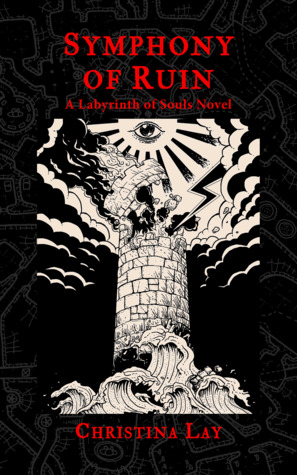
Symphony of Ruin Christina Lay
Publication date: July 25th 2017
Genres: Dark Fantasy, Fantasy
Death is stalking The City. From out of the catacombs, a deadly monster has arisen. Unfortunately for alchemist’s apprentice Remy the Rat Boy, his master is away and it’s up to Remy to discover the nature of the monster and put an end to its killing rampage. His search for answers takes him high into the elegant chambers of the city’s elite, and down into long forgotten ruins, into depths untraveled and unimagined for centuries. Lost in the ancient ruins with only ghosts and creatures of the darkness for companionship, Remy must use every ounce of wit and conjure every scrap of magic at his disposal in order to survive the labyrinth and save The City from its shadow self.
—
A magical and thrilling journey by award-winning author Christina Lay, inspired by the game and artwork of Dungeon Solitaire: Labyrinth of Souls. For more information on the Labyrinth of Souls fiction project, visit shadowspinnerspress.com
Death made its nightly rounds of the old quarter. Skeletal toes scraped the cobblestones and bones rattled in the keening wind blowing down from the steppes. The scythe of oblivion spared no one; man, woman or child might be snatched. This alone was reason enough to raid Master Marek’s pantry and Remy could think of several others as he cleared a space on the long table against the wall. He placed one knee on the well-worn surface and tested its strength. The table wobbled only slightly on uneven legs.
“Are you sure this is a good idea?” his friend Glyn asked from behind him.
“Not only is it good, it is excellent. Top notch. One of the best I’ve ever had.” Remy grabbed at the row of shelves to steady himself as he climbed up. The collection of bottles and jars rattled alarmingly. He paused as they settled. Nothing fell except a tuft of what looked like dried moss.
When he’d first moved in, Remy would have needed to use a footstool to reach the tabletop and he’d have to stand on the rickety table to reach Marek’s stash of quality liquor. Now if he stretched full length, he could finger the row of colored glass bottles on the top shelf while still on his knees.
Some of the bottles were filled with dyed water. He knew this because he was the one who’d drained and refilled them. His master never noticed because Marek rarely partook of the odd offerings of beet brandy, moss wine, crabapple cider and so on that his clients sometimes paid him with. No, Marek reserved his imbibing for the good stuff in the cut crystal decanter, an amber brandy he shared with Remy on Winter’s solstice, and then only by the wee thimble full.
Remy remembered its heat coating his throat, the flavors of caramel, loam and wealth, and the comforting affect a mere sip had on his state of mind. That was what he needed now—comfort. Glyn had just brought him the news of their mate Abernath’s death. Abernath, a robust young man of seventeen years—the same age as Remy and Glyn—had been found dead in an alley the night before without a fresh mark on him.
Remy’s long fingers tweezed the decanter toward the edge of the shelf. Glyn took an audible breath, sucking air out of the room in the process, braced to flee at the first hint of disaster. Glyn would rather face death than Master Marek in a rage.
“Marek is in the Giant Mountains,” Remy assured him, voice a little pinched from the effort of stretching to his full length and a tiny bit beyond. “I’ve had no word from him for weeks. He’s not about to pop up in the middle of the night with no notice. He likes his fire to be lit and his supper warm when he returns from a long trip.” The decanter tipped forward and Remy caught it with his other hand. As he eased back his sleeve caught on a jutting handle and brought a little pot thudding to the tabletop. The pottery cracked. Something black and viscous oozed out.
“Ox balls,” Remy muttered, and clambered down from the table.
“What is that?” Glyn backed up as if a jinn might spring forth from the ooze.
“Nothing to worry about,” Remy said. He gave the scratch marks on the lid a closer look. Ox balls and a pig’s poker to boot. “Nothing to worry about immediately anyway. Come on. Where’s your cup?”
Author Bio:
Christina Lay is primarily a writer of fantastical fiction, with frequent forays into mystery and mainstream. Many of her short stories have been published in anthologies, magazines and online. She's won five awards for her short fiction, including second place in the Writers' Digest Short Fiction competition in 2003. Her novels have also won awards, including first place in the Rupert Hughes Writing Competition at the Maui Writers Conference, First Place in the Journey Conference Novel competition, and she was a finalist in the Pacific Northwest Writers Association competition. Death is a Star, her first novel to be published, was released in February 2013.
Christina was born in Eugene, Oregon and graduated from the University of Oregon in 1988 with a degree in Sociology and a minor in Political Science. She's worked a wide variety of jobs, from pastry shop clerk to computer software support to cost accounting and bookkeeping for nonprofits. Her favorite job so far has been administrative assistant in a Victorian House Museum. The goal is always to spend as much time as possible writing. For fun she likes to study languages through poetry, take way too many pictures with digital cameras, and be herded by her border collie, Lazlo.